

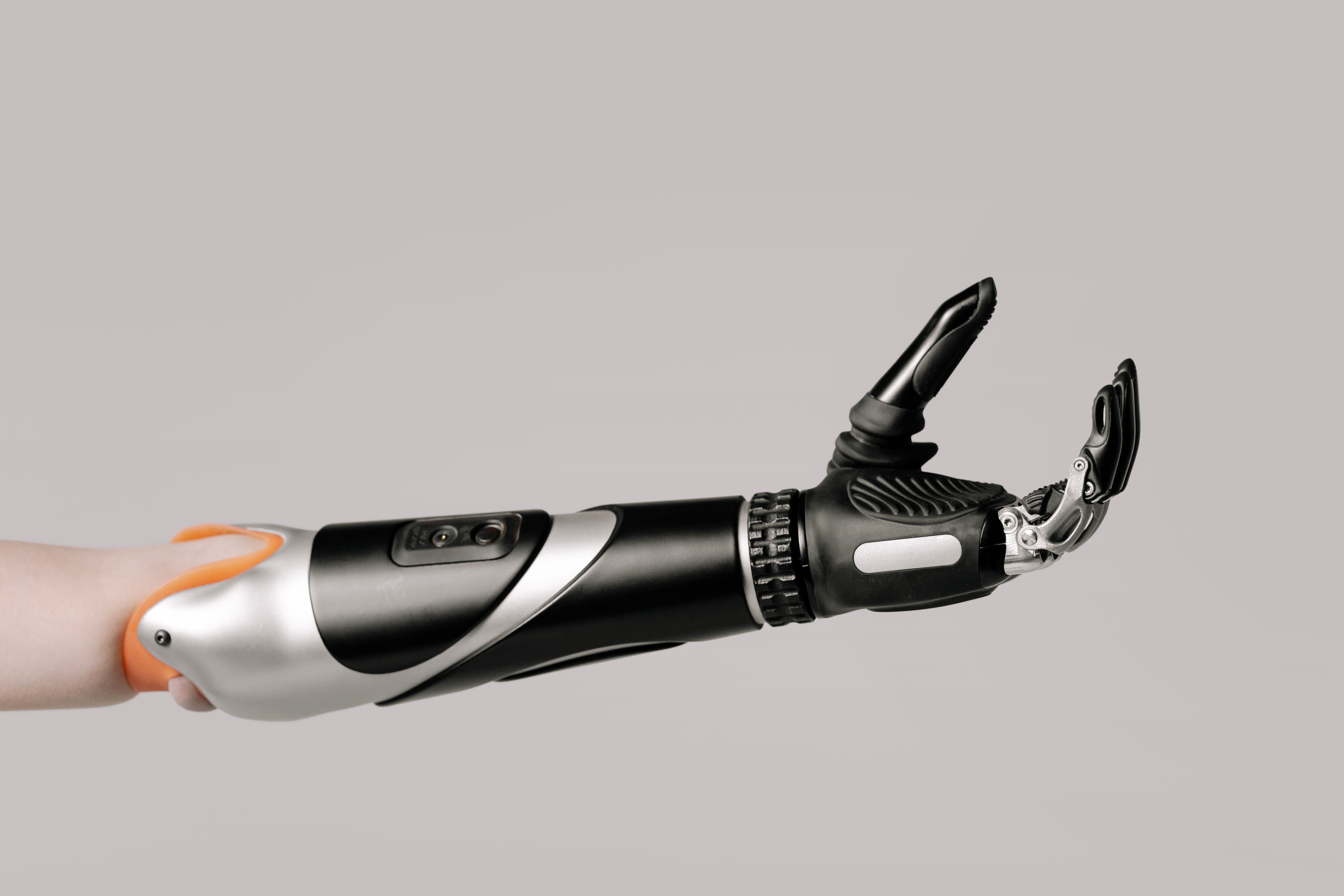
Shipping a medical device, prosthesis, or piece of laboratory equipment exposes the company to significant loss in the event of theft, loss, or damage. Under many transportation policies, the compensation payable by the Carrier is capped based on the weight of the goods, unless a declared value, special agreement, or specific policy applies. It may therefore be significantly lower than the actual value of the goods. Ad valorem cargo insurance covers the goods up to their insured value, subject to the policy’s coverage, exclusions, and terms and conditions.
This guide is intended for manufacturers, distributors, importers, and maintenance service providers who ship medical equipment. It explains when the carrier's liability is insufficient, how to distinguish between different types of coverage, which products are covered, what insurance generally covers and excludes, and how to respond before and after a claim.
Why insure medical equipment during transport?
Medical equipment has a combination of characteristics that make it unique. Its value is concentrated in what is often a relatively light weight; it is susceptible to mechanical, optical, or electronic damage; and replacement can take several months. Added to this are the costs of installation or commissioning, as well as the risks inherent in returns, loans, demonstrations, and after-sales service operations, which increase the number of high-risk trips.
The most important factor is functional damage. A device may arrive with no visible damage but be unusable or non-compliant after an impact, vibration, temperature fluctuation, or improper handling. An out-of-calibration ultrasound machine, a microscope with misaligned optics, or an automated machine with a malfunctioning sensor: the equipment may appear intact, but putting it back into service requires inspection, recalibration, and sometimes validation. It is precisely this type of loss that compensation based on weight fails to account for.
Is the liability of the carrier sufficient?
Rarely. The liability of Carrier is capped and does not necessarily correspond to the actual value of the equipment. It depends on the applicable legal framework, the mode of transportation, the contract, and the circumstances of the incident.
The SDR, or Special Drawing Right, is a floating-value unit of account used by the International Monetary Fund; only values expressed in SDRs are authoritative, and any conversion to euros is for informational purposes only. The increase in the air cargo limit to 26 SDRs per kilogram, effective December 28, 2024, has been confirmed by the International Civil Aviation Organization.
It would be inaccurate to say that liability “ends at the weight” in all cases. The correct way to put it is as follows: in many transportation regimes, compensation is capped based on weight, unless a declared value, special agreement, or specific regime applies. The overall mechanism is detailed in our guide to cargo insurance.
An example illustrates this discrepancy. An 80-kg laboratory robot is worth €40,000. With a limit of 8.33 SDRs per kilogram for international road transport, the maximum theoretical compensation may fall far short of the item’s value. The exact amount depends on the value of the SDR at the time in question, the applicable regulations, and the circumstances of the loss, but this order of magnitude is sufficient to illustrate the discrepancy between weight-based compensation and the actual value.
Which insurance policy should I choose?
Several provisions often overlap in research without having the same purpose. Distinguishing between them helps avoid choosing the wrong contract.
The declaration of value is based on the Limit but remains subject to the liability provisions of the Carrier, including its exemptions and exclusions. Ad valorem insurance, on the other hand, covers the goods based on an insured value, independent of the compensation provided under the Carrier, within the limits of the policy. This principle is explained in our guide to ad valorem insurance.
Which products might be affected?
The needs cover a wide range: prosthetics and prosthetic components, implants and related instruments, imaging equipment such as ultrasound machines, microscopes and optical instruments, laboratory automation systems and analyzers, in vitro diagnostic devices, monitoring devices, electronic modules and control boards, surgical instruments, biomedical equipment, as well as spare parts, demonstration or loaner equipment, and equipment returned for after-sales service.
One important caveat: insurability depends on the product, its condition, its packaging, the route, the Carrier, the destination, and the contractual exclusions. Organic, temperature-sensitive, radioactive, or hazardous products—or those subject to specific customs regulations—must undergo a specific analysis and may be subject to special conditions or separate coverage.
What does transportation insurance cover, and on what basis?
Depending on the coverage purchased, cargo insurance may cover total or partial loss, theft when specified, accidental damage, breakage, and damage resulting from impact or handling. It may include repair costs, replacement costs depending on the chosen basis of indemnity, return or reshipment costs when covered, and, if the policy provides for it, costs for bringing the equipment back into compliance or recalibration. Coverage may extend to outbound and return shipments, after-sales service, loaner equipment, and demonstrations.
The clause that should be read first is the basis for compensation, as it determines what will actually be paid: purchase price, replacement value, an agreed-upon value established in advance, repair costs, costs to restore the item to its original condition, or incidental expenses specified in the contract. For equipment that requires skilled labor to be restored to working order, this clause carries more weight than the listed limit.
What types of damage are often excluded?
It is essential to carefully review the exclusions. The most common exclusions relate to insufficient or unsuitable packaging, inherent defects in the goods, defects existing prior to shipment, wear and tear or internal failure unrelated to the shipment, delays alone (unless specifically covered by a warranty), or temperature or humidity issues without an appropriate warranty. Additional grounds for exclusion include transport by an unauthorized carrier, prohibited or misdeclared goods, lack of proof of value, declaration submitted after the contractual deadline, and repairs carried out without prior agreement or expert assessment when required by the contract.
One point warrants special attention: loss of business. You should not assume that general liability insurance automatically covers this. As a general rule, this is a separate coverage or an extension that must be verified, and is not an automatic component of cargo insurance.
How do you prepare a shipment of medical supplies?
While this isn’t a rigid procedure, following a few best practices can significantly reduce the risk of damage and denial of compensation. Before shipping, it’s helpful to identify the product, its serial number, and its value; take a photo of it before packing; verify that it’s in working order and, if necessary, check its calibration; and keep the invoice, delivery slip, and proof of value. When it comes to packaging, using the original packaging or approved packaging, protecting fragile and removable parts, securing movable parts, and, if applicable, including shock or tilt indicators, can make all the difference. Documenting temperature and humidity conditions, providing handling instructions, verifying the carrier condition, and purchasing coverage before handing the shipment over to the carrier round out the preparation process.
This procedure complies with a regulatory requirement. The European Medical Device Regulation (Regulation (EU) 2017/745, known as the MDR) requires, among other things, that importers and distributors ensure that storage and transport conditions do not compromise the device’s compliance and that they adhere to the conditions specified by the manufacturer. Similar requirements are set forth in the In Vitro Diagnostic Medical Devices Regulation (Regulation (EU) 2017/746, known as the IVDR) for laboratory equipment, regarding performance degradation during transport and storage.
What should you do in the event of damage or loss?
The quality of the coverage is meaningless if the procedure is not followed. In practice, you should photograph the package, the packaging, the protective materials, and any damage, and then note specific, well-reasoned reservations on the delivery document, as functional damage often only becomes apparent during testing. The device must be tested according to a documented procedure, and both the device and its packaging must be retained for expert evaluation; damaged parts must not be discarded without prior approval.
The time limits depend on the type of transport. For domestic transport within France, Article L.133-3 of the Commercial Code requires a reasoned protest to be sent to the carrier within three days of receipt, excluding holidays; this same article specifies that it does not apply to international transport, which is governed by the time limits set forth in the applicable convention, such as the CMR. The notice to the insurer, however, is subject to the deadline specified in the insurance contract, which is separate from the one mentioned above.
A mechanism links these steps: subrogation. The insurer that pays the claim then exercises its right of subrogation against the at- Carrier ; preserving this right—through specific reservations and adherence to deadlines—is essential for receiving full compensation. Finally, documenting the costs of repair, recalibration, or replacement facilitates the assessment and cost estimation.
How much does insurance cost?
There is no standard rate that applies to all cases, as the price depends on many factors: the insured value, the nature of the goods, the frequency of shipments, the claims history, the destinations, the modes of transportation, the quality of packaging, the type of coverage, the deductible, the level of security, and whether outbound, return, and after-sales service shipments are covered.
The issue is not just the unit cost, but overall efficiency. Coverage for goods proportional to their value—with no minimum premium that penalizes shipments of low-value spare parts, independent of the carrier, and consolidating new shipments, after-sales service, loans, and returns under a single policy—optimizes the overall cost while eliminating residual exposure for high-value goods. If you regularly ship valuable equipment, you can open an account and estimate the coverage needed for your shipments.
For shipments with a very high value-to-weight ratio, see also our guide to insuring high-value packages; for machinery and equipment, see our guide to industrial equipment.
Sources
- Regulation (EU) 2017/745 on Medical Devices (MDR): https://eur-lex.europa.eu/eli/reg/2017/745/2023-03-20
- Regulation (EU) 2017/746 on in vitro diagnostic medical devices (IVDR)
- CMR Convention, Article 23; Montreal Convention (limit increased to 26 SDRs/kg as of December 28, 2024, ICAO): https://www.icao.int/news/international-air-travel-liability-limits-set-increase-enhancing-customer-compensation-0
- Commercial Code, Article L.133-3: https://www.legifrance.gouv.fr/codes/article_lc/LEGIARTI000021486442
- General Standard Contract, Decree No. 2017-461 of March 31, 2017, Légifrance: https://www.legifrance.gouv.fr/jorf/id/JORFTEXT000034330431