

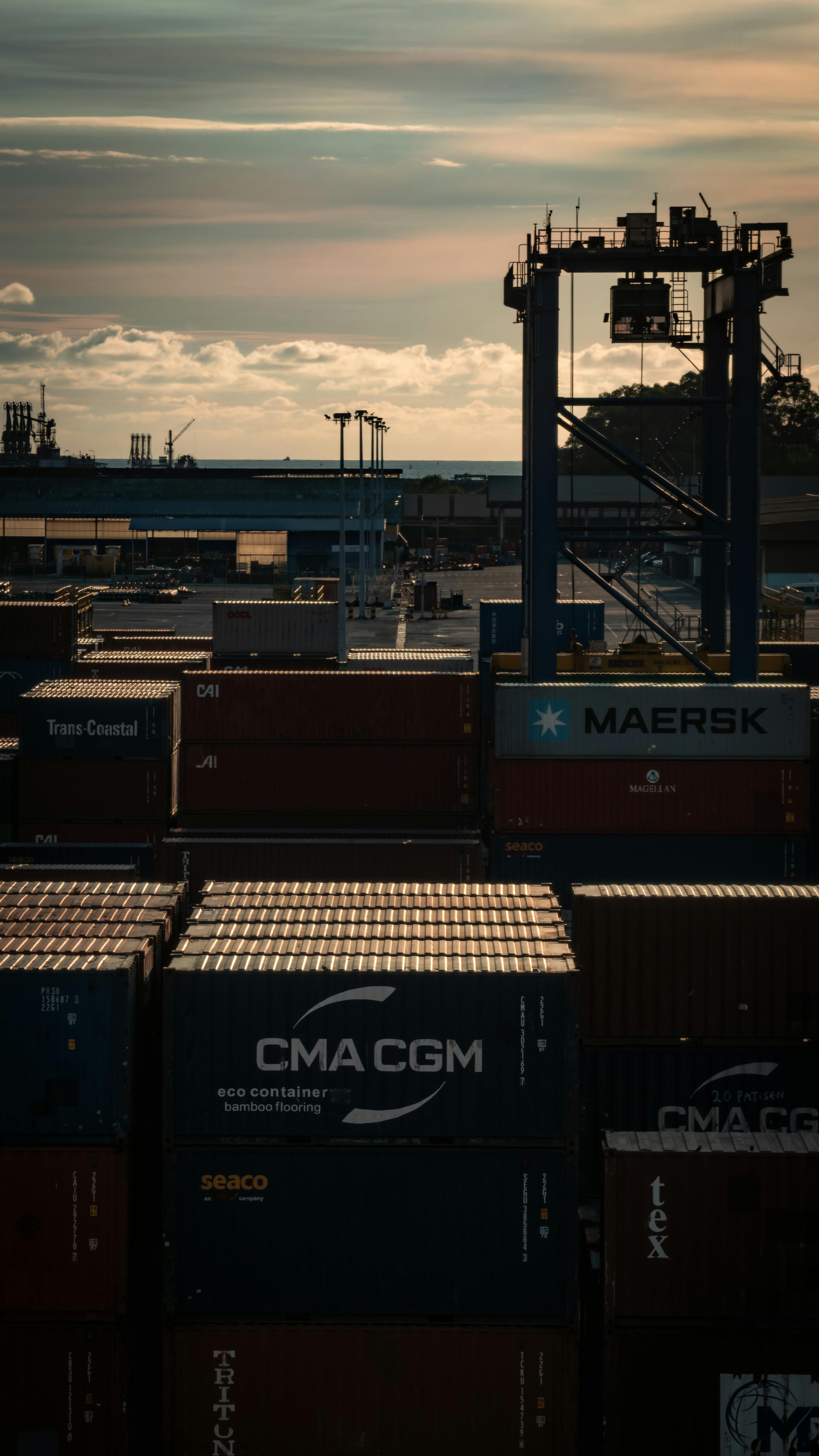
Freight insurance refers to coverage that protects the value of goods during transit—regardless of the mode of transport (road, air, sea, or rail)—against loss, theft, and damage. Its key feature is that it provides compensation based on the value of the goods, whereas transportation law is based on weight. Understanding this difference is key to making an informed decision about your coverage.
Definition and Scope: What Exactly Are We Talking About?
Three concepts are often confused and should be distinguished from one another, as they do not refer to the same risk or the same payer.
The contractual liability of Carrier is not an insurance policy you purchase: it is the legal obligation of Carrier to be liable for the goods entrusted to it. This liability is presumed but capped, and this Limit is unrelated to the actual value of the goods.
Professional liability insurance covers damages that your business causes to third parties. It does not cover the goods themselves.
Comprehensive business insurance protects your premises, inventory, and idle property, but not your shipments in transit.
Freight insurance is further categorized based on who is transporting the goods. When a company transports goods using its own vehicles, it is covered by insurance for goods transported on its own account. When it entrusts its shipments to a third- Carrier r—which is the norm in e-commerce and B2B distance selling—it is covered by so-called “freight insurance,” which includes ad valorem insurance purchased from a third party.
A word about the term “ad valorem,” which is often used ambiguously. It does not refer to a product, but to a basis for valuation: compensation based on declared value, as opposed to compensation based on weight. This principle applies in two distinct contexts:the “declared value” option offered by the carrier itself, andthird-party ad valorem insurance purchased from an independent insurer or broker. These two options differ in terms of their cap, compensation timeframe, and the party responsible for payment, as we detail in our comparison of package insurance plans.
This guide addresses the most common scenario: goods entrusted to a Carrier. It outlines the applicable liability framework, the limits by mode of transport, the valuation bases, the types of contracts, the claims process, and the method for assessing your needs.
Carrier's Liability Policy, Mode by Mode
A common principle: presumed liability, but with a cap
Regardless of the mode of transport, transport law is based on the same principle: the “ Carrier ” is presumed liable for loss or damage occurring between the time the goods are taken into custody and the time of delivery. Under French domestic law, Article L.133-1 of the Commercial Code makes the carrier the guarantor of the goods. In international road transport, Article 17 of the CMR Convention holds the “ Carrier ” liable for total or partial loss and for damage occurring between the time the goods are taken into custody and the time of delivery. The burden of proof is thus reversed: it is up to the “ Carrier ” to demonstrate that they can be exempted from liability, not up to the shipper to prove fault.
This protective principle, however, is accompanied by a compensationLimit e calculated based on weight, with no relation to the value of the goods. This is the tipping point of the entire issue: the higher the value-to-weight ratio, the greater the gap between the capped compensation and the actual loss.
Applicable limits depending on the mode
- National Road Carrier (France), general standard contract, applicable in the absence of a written agreement: for shipments weighing less than 3 metric tons, €33 per kilogram of gross weight, up to a maximum of €1,000 per package; for shipments of 3 metric tons or more, €20 per kilogram, up to a maximum of the gross weight in metric tons multiplied by €3,200 per shipment.
- International Road Freight, CMR Convention (Article 23, Paragraph 3): 8.33 SDR per kilogram of missing gross weight, or approximately 10 € per kilogram.
- International Air Transport, Montreal Convention (Article 22, Paragraph 3): 26 SDR per kilogram as of December 28, 2024, or approximately 31 to 33 euros per kilogram.
- Maritime, Hague-Visby Rules: 666.67 SDR per package or unit, or 2 SDR per kilogram of gross weight, whichever is higher.
- International Rail Transport, CIM/COTIF Rules (Article 30, §2): 17 SDRs per kilogram of missing gross weight, or approximately €21 per kilogram.
The SDR (Special Drawing Right) is a unit of account used by the International Monetary Fund whose value fluctuates: one SDR was worth approximately €1.22 in mid-2024. Only SDR amounts are considered official; euro equivalents are provided for informational purposes only. Note regarding air transport: the cargo liability limit under the Montreal Convention increased from 22 to 26 SDRs per kilogram, effective December 28, 2024, as part of the quinquennial inflation adjustment.
Under French domestic law, there is an important practical distinction to note: the general standard contract applies only in the absence of a written agreement between the parties. Express carriers and couriers publish their own general terms and conditions of sale, the Limits of which differ and change regularly. It is best to check the general terms and conditions of the selected Carrier on the date of shipment, rather than relying on a generic figure.
Cases in which the Carrier grants an exemption
Presumed liability is not automatic. The carrier may be relieved of this liability, in whole or in part, in specific cases. The CMR is the most explicit in this regard and serves as a reference for the overall rationale: the carrier is relieved of liability if it proves that the damage resulted from the fault of the consignee, an inherent defect in the goods, or circumstances that it could not avoid. In addition, there are specific cases of exemption: the use of open, uncovered vehicles when agreed upon; the absence or defectiveness of packaging; handling or loading performed by the shipper or consignee; and the special nature of certain goods.
These reasons account for a large portion of claims denials in practice. Packaging deemed inadequate, reservations not raised at the time of delivery, or an imprecise description of the goods’ nature—all of these provide loopholes for the Carrier. This is a particularly sensitive issue for goods with a high value-to-weight ratio and for categories that carriers classify as “valuable goods” (watches, jewelry, high-tech items), which are often excluded or subject to very low coverage limits in their terms and conditions. We detail the precautions specific to these shipments in our guide to insuring high-value packages.
How to Handle the cap: Declaration of Value and Gross Negligence
There are two mechanisms that allow the legal “ Limit ” to be exceeded. The first is the declaration of value, or declaration of special interest upon delivery, provided for under each regime: Article 24 of the CMR authorizes the shipper to declare a higher value in exchange for an agreed-upon surcharge, and the French General Standard Contract provides the same option, with the declaration then taking the place of the “ Limit.” The second is gross negligence: in the event of fraud or equivalent misconduct, Article 29 of the CMR deprives the Carrier of the benefit of the liability limits, but this proof is difficult to establish and requires litigation.
The limit on the declared value must be clearly understood: it remains the responsibility of the Carrier. It is therefore subject to the same grounds for exemption, the same claim deadlines, and the same category exclusions. It is covered by the Limit; it does not change the nature of the policy. This is precisely what distinguishes it from a separate personal property insurance policy, which compensates for property damage based on the insured value, without having to establish the liability of the Carrier.
Bases for Valuation: by weight, declared value, or agreed-upon value
The entire compensation process boils down to the basis used to calculate the reimbursement. There are three such bases, and it’s important to understand the differences between them before signing.
Compensation based on weight is the default legal and contractual system, as described above. It is predictable but disconnected from value.
Compensation based on the declared value is determined by the value declaration submitted at Carrier. It replaces the amount declared at Limit, but remains subject to the liability provisions of Carrier, including its exemptions and exclusions.
Compensation based on the agreed-upon value is specific to optional coverage policies: the value of the goods is agreed upon in advance between the insured and the insurer, which avoids disputes and value adjustments at the time of a claim. This provides the most comprehensive protection for items whose value is difficult to determine after the fact (rare items, art, high-value goods).
In practice, the clause you should read first in any contract is the basis for compensation: purchase price, replacement value, agreed-upon value, or the sale price for a retailer. This clause determines what you will actually receive, much more so than the Limit listed.
Contract Families
Beyond the valuation basis, hedges are organized into several categories.
Depending on who is hauling the goods, a distinction is made between insurance for own account (the company transports its own goods using its own vehicles) and freight insurance, which applies when the goods are entrusted to a third- Carrier r. French freight insurance policies cover goods regardless of the mode of transportation and, in principle, provide coverage for “door-to-door” transportation, from the time the goods are handed over to the first Carrier r until delivery to the consignee.
Depending on the frequency of shipments, several types of insurance policies are available: a single-shipment policy for one-time shipments, a rolling orsubscription policy to automatically cover a regular flow of shipments, and a third-party shipper policy purchased through the delivery company. A company that ships regularly is usually best served by a subscription policy, which covers all shipments without the risk of oversight and eliminates the need to renegotiate coverage for each shipment.
Depending on the scope of coverage, a distinction is made between “all-risk” coverage—which covers all types of damage, including loss and theft—and coverage for specified risks (or “specified events”), which is limited to a list of events enumerated in the contract. The price difference between the two often becomes apparent at the time of a claim.
One specific maritime situation deserves special mention:general average. If a decision is made to sacrifice part of the cargo to save the shipment (such as jettisoning cargo), the cargo owner may be required to pay a contribution calculated based on the value of their goods, even if those goods arrive intact. A good marine all-risks policy covers this contribution.
The Claims and Collections Process
The quality of the coverage is meaningless if the procedure is not followed. Compensation depends on three steps.
Upon delivery. Inspect the goods and, if necessary, note specific and well-founded reservations on the delivery slip. Vague reservations (“subject to unpacking”) are weak and may even be unenforceable against the Carrier. This is the first step in protecting your rights.
Claims against the Carrier. In the event of damage or partial loss, Article L.133-3 of the Commercial Code requires that a substantiated protest be sent to Carrier within three days (excluding holidays) of receipt. This deadline applies to the claim against the Carrier, not to the report to your insurer. The claim is then subject to a one-year statute of limitations for land and sea transport, and a two-year statute of limitations for air transport.
Reporting the claim to the insurer. This must be done within the time limit specified in your insurance policy, which is separate from the deadlines listed above. You can file your claim directly online through our claims portal, which centralizes all documents and information.
A key technical aspect links these steps: subrogation. The insurer that compensates you is subrogated to your rights and exercises the right of recourse against the Carrier. If you have not preserved this right of recourse (missing reservations, protest deadline exceeded), the insurer may reduce its compensation by the amount it can no longer recover. Following the proper sequence of steps is therefore not a mere formality; it is what guarantees full compensation.
The most common reasons for rejection stem directly from these steps: insufficient packaging, missing or vague reservations, a category of goods excluded from the contract, or a missed declaration deadline.
Assessing Your Needs: The Method
The right criterion isn't the premium price, but whether the coverage matches your risk profile. Here's a simple test: the value-to-weight ratio.
Compare the capped indemnity you would receive (weight in kilograms multiplied by the mode cap) with the actual value of the shipment. As long as the two are close, the statutory coverage is sufficient, and there is no need to add additional coverage: this is the case for heavy goods with a low unit value. As soon as the actual value significantly exceeds the maximum compensation, the difference becomes a net loss with each claim, and additional insurance coverage is warranted.
Before purchasing a policy, regardless of the insurer, there are five points that deserve careful consideration: the basis for compensation (agreed-upon value, declared value, purchase price, or sale price), excluded categories (valuables, hazardous materials, perishable goods), deductibles and minimum coverage amounts, the “Limit ” per package and per shipment, and the claim filing deadlines, which must be manageable given your operational needs. It is the combination of these five provisions—not the advertised rate—that determines the actual level of coverage.
Sources
- Commercial Code, Articles L.133-1, L.133-3, and L.133-6 (liability of the valet, protest, statute of limitations): Légifrance
- General Standard Contract, Decree No. 2017-461 of March 31, 2017, Annex II to Part 3 (Regulatory Provisions) of the Transportation Code: https://www.legifrance.gouv.fr/jorf/id/JORFTEXT000034330431
- Montreal Convention, Revision of Liability Limits as of December 28, 2024, ICAO: https://www.icao.int/news/international-air-travel-liability-limits-set-increase-enhancing-customer-compensation-0
- CIM (COTIF) Rules, Article 30, Section 2, CIT-Rail: https://cit-rail.org/en/freight-traffic/case-law-old/
- Comparative Analysis of Liability Systems (Road, Rail, Sea, Air), Benesch: https://www.beneschlaw.com/resources/cargo-liability-global-comparative-analysis-of-legal-regimes.html
- Limitations of Liability, Land and Sea Transportation, Howden: https://www.howdengroup.com/fr-fr/limitations-de-responsabilite-et-transports-maritime-et-terrestre
- Cargo Insurance (Coverage, Types of Policies, General Average, Statute of Limitations), France Assureurs: https://www.franceassureurs.fr/lassurance-protege-finance-et-emploie/lassurance-protege/lassurance-en-pratique-pour-les-professionnels/entreprise-assurance-du-transport-de-marchandises/